AP CSA FRQ 1 and 2: Methods and Class Design Without Getting Lost
A practical guide to AP CSA FRQ 1 and 2: read the spec, map the fields and parameters, and write one clean method at a time.
Read it to name the pattern, then practice while it is still fresh.
Prepared by Askiras editorial team. These guides stay short on purpose: one pattern, one worked example, one clear next step into practice. How we build guides.
Uses public AP course and exam context; does not reproduce protected College Board prompts.
College Board AP context, Askiras independence, and no unsupported outcome claims.
How do you start AP CSA method and class FRQs?
Translate the prompt before writing Java: list the parameters, required return value, fields, constructor state, and any mutation. Most lost points come from solving a nearby problem instead of the specified one.
FRQ 1 and FRQ 2 usually go wrong before the first line of code
Students often think they lost AP CSA free-response points because their Java was not fancy enough.
Usually that is not the real problem.
The real problem starts earlier:
- they did not read the spec carefully
- they confused fields with parameters
- they started writing before deciding what the method had to return
- they solved a nearby problem instead of the actual one
FRQ 1 and FRQ 2 reward clean translation from English to code.
What these two FRQs are actually asking for
FRQ 1: Methods and Control Structures
This question usually asks you to write one or two method-sized chunks of code that follow a very specific contract.
That often means:
- use a loop or conditional
- call existing methods from the class
- build or return the right result
- match the examples in the prompt
FRQ 2: Class Design
This question asks you to build a class from a specification.
That usually means:
- define private fields
- write a constructor
- write required methods
- make each method use the stored object state correctly
Neither question is supposed to be a giant software project. They are structured, small, and point-sensitive.
Start with a translation pass
Before you code, write a quick checklist from the prompt.
For a method question, ask:
- What are the parameters?
- What must the method return?
- What must the method change, if anything?
- What loop or conditional is probably needed?
For a class-design question, ask:
- What data belongs in fields?
- What data belongs only in method parameters?
- What must the constructor initialize?
- Which methods read the fields, and which modify them?
This sounds basic. It is where a lot of points are won.
A fast FRQ 1 example
Suppose the prompt says:
- write a method that counts how many numbers in an array are even
- return the count as an
int
The clean outline is:
public int countEvens(int[] nums) {
    int count = 0;
    for (int i = 0; i < nums.length; i++) {
        if (nums[i] % 2 == 0) {
            count++;
        }
    }
    return count;
}
Before worrying about the exact code, notice the structure:
- an accumulator
- a loop through the array
- a condition
- a return at the end
That is what FRQ 1 often looks like.
The most useful FRQ 1 habit: write the skeleton first
When the prompt is method-based, write the bones before the details:
- method header
- variable setup
- loop or conditional shell
- return statement
That keeps you from wandering.
For example, if you know the method must:
- inspect each element
- test a condition
- count or total something
then you already know the broad form.
You can fill in the specific method calls after that.
Common FRQ 1 mistakes
Returning the wrong thing
Students write logic that almost works, then return the loop variable or print the result instead of returning the actual answer.
Ignoring the method contract
If the method is supposed to modify an object, do not build a separate throwaway value and return that.
If the method is supposed to return a value, do not just change a field and stop.
Losing a boundary case
The method works for the middle of the data but breaks on:
- an empty array
- the first item
- the last item
- a case where no values match
That is why the examples in the prompt matter so much.
FRQ 2 is mostly about keeping object state clean
FRQ 2 can look more formal than it really is.
The prompt is usually giving you a small model:
- what the object stores
- how it gets initialized
- what each method should do
The biggest trap is mixing together three different things:
- instance variables
- constructor parameters
- local variables inside methods
If those blur together, the class gets messy fast.
A fast FRQ 2 example
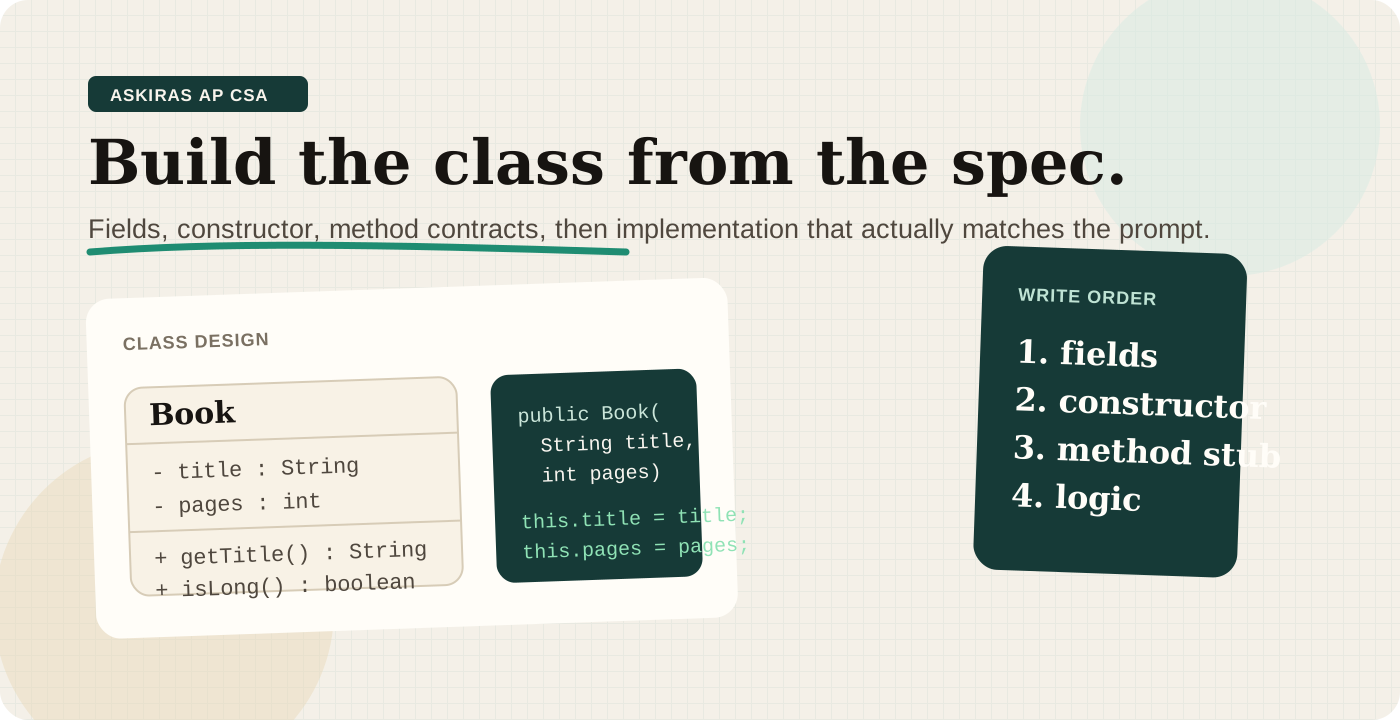
Suppose the prompt wants a Book class with:
- a private
title - a private
pages - a constructor
- a
getTitlemethod - an
isLongmethod
The basic shape is:
public class Book {
    private String title;
    private int pages;

    public Book(String title, int pages) {
        this.title = title;
        this.pages = pages;
    }

    public String getTitle() {
        return title;
    }

    public boolean isLong() {
        return pages > 300;
    }
}
Notice what makes this clean:
- fields are private
- constructor stores the incoming values
- methods use the fields
- no extra clutter
That is usually enough.
The most useful FRQ 2 habit: decide fields versus parameters on purpose
Ask one question:
Does this piece of data belong to the object after the method finishes?
If yes, it is probably a field. If no, it is probably a parameter or a local variable.
That one test prevents a lot of awkward class-design mistakes.
For example:
- a book’s title belongs to the object
- a temporary counter inside one method usually does not
Common FRQ 2 mistakes
Forgetting this in the constructor
If the parameter has the same name as the field, this matters.
public Book(String title) {
    title = title;
}
That line only assigns the parameter to itself. The field never changes.
Writing methods that ignore the object’s state
If the method should use the stored fields, do not accidentally create new local variables that replace the real job.
Overcomplicating the class
FRQ 2 does not reward “enterprise Java.” It rewards matching the spec.
If the prompt wants three fields and three methods, do that well. Do not invent extra architecture.
A simple protocol for FRQ 1 and FRQ 2
Use this every time.
- read the full prompt once without coding
- underline what must be returned or changed
- list the fields, parameters, and helper information already given
- write the method or class skeleton
- fill in the logic line by line
- test the examples in the prompt mentally before moving on
That protocol is not glamorous. It is how you stop leaking easy points.
What to check before you leave the question
For FRQ 1:
- Did I return the required value?
- Did I use the right loop bound?
- Did I handle the no-match case correctly?
For FRQ 2:
- Are the fields really fields?
- Does the constructor initialize them?
- Do the methods use the object’s stored state?
If you only have thirty seconds left, those checks are still worth doing.
The real goal
FRQ 1 and FRQ 2 do not ask you to be brilliant. They ask you to be exact.
If you can translate the prompt, build the skeleton, and keep fields, parameters, and return values from blurring together, these two questions become much more manageable.
Frequently asked questions
Do I need to write helper methods on AP CSA FRQ 1 or 2?
Only if they make the solution clearer and fit the prompt. Most AP CSA FRQs can be solved cleanly without inventing extra structure. Start with the required method or class before adding anything optional.
What is the most common FRQ 2 class design mistake?
Students often blur fields and parameters. They write local variables instead of instance variables, forget `this` in the constructor, or return the wrong value from a method that should use stored object state.
Should I start coding AP CSA FRQs immediately?
No. Spend a minute translating the specification first. The prompt usually tells you exactly what the method must return, what should change, and which data already exists.
Keep going in this exam
Other guides at Askiras
If you are also prepping another exam, these short guides cover the same "name the pattern, then practice" habit.