How to Write Better SAQs in AP World
AP World SAQs score better when you stop writing mini-essays. One claim, one piece of evidence, one clear connection.
Read it to name the pattern, then practice while it is still fresh.
Prepared by Askiras editorial team. These guides stay short on purpose: one pattern, one worked example, one clear next step into practice. How we build guides.
Uses public AP course and exam context; does not reproduce protected College Board prompts.
College Board AP context, Askiras independence, and no unsupported outcome claims.
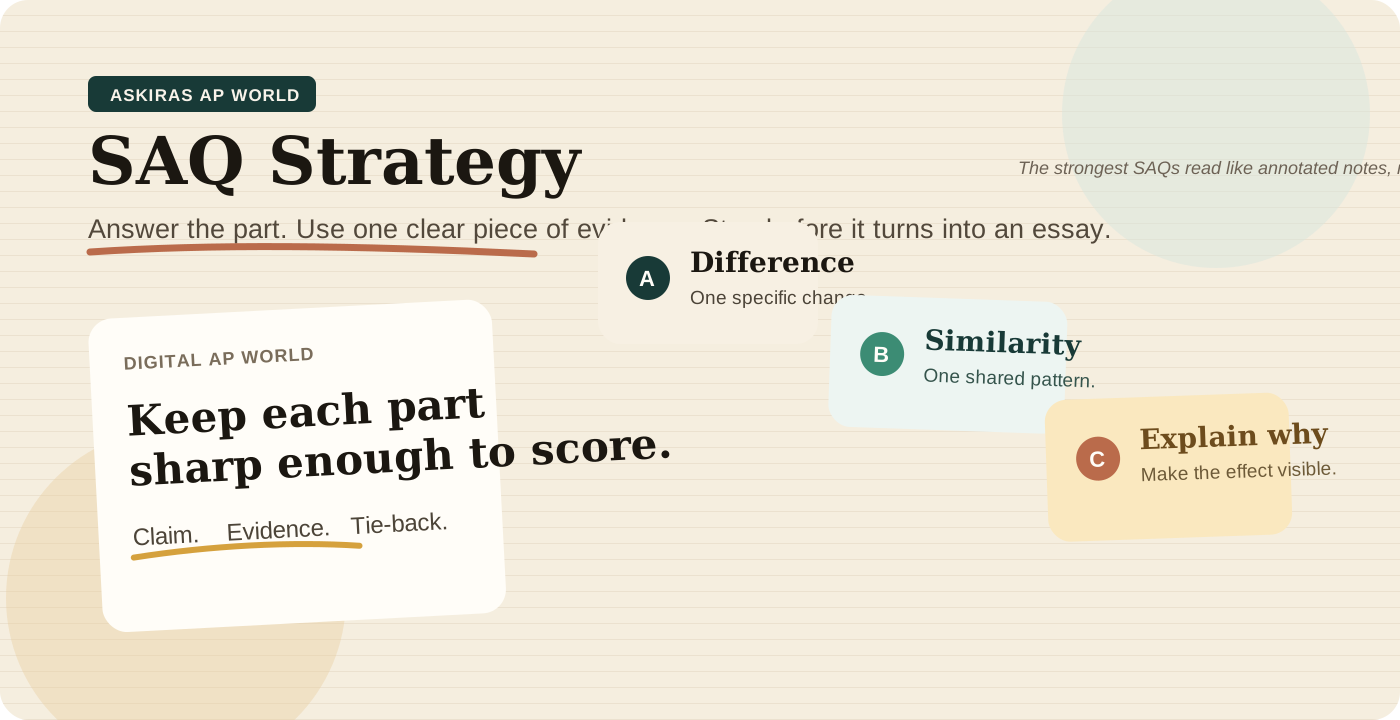
The SAQ is shorter than it looks
SAQs look small enough to wing. That is usually when students turn them into tiny essays.
On the current AP World exam, students still face three short-answer questions in a tight window, and the 2026 exam on May 7 is fully digital.
Typed answers can get too long fast.
The scoring still wants one clear move:
- answer the prompt directly
- support it with one specific piece of evidence
- stop before the answer turns into a mini-essay
If you treat SAQs like compressed argument writing instead of tiny DBQs, the section gets easier.
Fast example first
Take a prompt like this:
Using your knowledge of world history c. 1750-1900, answer parts A, B, and C.
(A) Identify ONE specific way the Haitian Revolution differed from the American Revolution.
(B) Identify ONE specific way the two revolutions were similar.
(C) Explain ONE specific reason the Haitian Revolution had a global impact outside Haiti.
Here is the kind of answer shape that works:
A. One key difference was that the Haitian Revolution was led by enslaved people and free people of color and ended slavery, while the American Revolution was led mostly by colonial elites and left slavery in place.
B. One similarity was that both revolutions used Enlightenment ideas about rights and self-government to justify breaking from European imperial rule.
C. The Haitian Revolution had a wider impact because it showed that enslaved people could defeat a major colonial power, which strengthened abolitionist arguments and frightened slaveholding societies across the Americas.
Notice what those answers do not do:
- no long setup
- no pile of extra facts
- no attempt to sound academic
Each part makes one claim and grounds it in something specific.
What the SAQ is really rewarding
Students often think SAQs reward “everything I remember.” They reward control.
A good answer usually has three pieces:
- A direct answer to the part.
- A specific example, policy, event, or development.
- A sentence that makes the connection obvious.
If you name evidence but never tie it back to the question, the response can feel half-finished.
The best format on a digital exam
Because the exam is fully digital in 2026, the cleanest SAQ habit is visual as much as historical.
Think in parts:
- part A
- part B
- part C
You are not writing one flowing paragraph. You are answering three separate tasks.
A strong typed response usually looks like this:
- sentence 1: answer the part
- sentence 2: name the evidence
- sentence 3: connect the evidence if needed
Sometimes two sentences is enough. Sometimes you need four. If you are writing six or seven, you are usually overexplaining.
How to use evidence without bloating
The most common SAQ mistake is panic writing. The student knows something real, but instead of choosing one example, they unload three.
That creates two problems:
- the answer gets slower
- the line of reasoning gets blurrier
The better rule is:
Use the most specific example you can explain cleanly in one breath.
That might be:
- the millet system
- Mansa Musa’s hajj
- the spread of Islam through Indian Ocean merchant communities
- the Haitian abolition of slavery
Once you have a specific example, stop shopping for more unless the prompt forces comparison or nuance.
Specific beats numerous.
A simple decision rule for each part
When you read an SAQ part, ask:
What is the verb?
The usual verbs tell you the job:
- identify means name a specific development or difference
- describe means make the feature clear
- explain means show why or how
If the part says identify, do not overbuild. If it says explain, make sure the answer includes cause, effect, or reasoning instead of just a label.
Pacing that keeps the section calm
The short-answer section feels rushed mostly because students spend too long polishing the first answer.
A better target is simple:
- move steadily through all three questions
- give each part a clean first answer
- only add detail if it clearly improves the response
On a section this tight, finishing all the parts with controlled specificity is better than writing one beautiful answer and two thin ones.
If you get stuck, do not stare at the screen waiting for a perfect sentence. Ask yourself:
What is one specific thing I know that answers this part?
Then write that.
The mistakes that keep costing points
1. Writing background instead of an answer
Students sometimes start with two sentences of context before they answer the actual part. That is wasted time unless the context is doing real argumentative work.
2. Giving a category instead of an example
“Trade increased cultural exchange” is too broad by itself. “Indian Ocean trade spread Islam through Muslim merchant communities in port cities” is much stronger.
3. Answering with a fact but not a connection
If the prompt asks why something mattered, do not stop after naming the event. Explain the effect.
4. Treating all three parts like one essay
The SAQ section is modular. Keep your thinking modular too.
A second quick example
Imagine a part asking:
Explain ONE way environmental or technological factors enabled trade in the Indian Ocean.
A weak answer:
The Indian Ocean had a lot of trade and many merchants traveled there.
A better answer:
Seasonal monsoon winds helped merchants time their travel across the Indian Ocean because sailors could ride one wind pattern in one part of the year and return on the reverse pattern later.
Why the second answer works:
- it answers the question directly
- it uses a specific factor
- it explains how that factor helped trade
How to practice SAQs without wasting time
Do not just read sample answers and nod. A better drill:
- Take one SAQ prompt.
- Give yourself a strict timer.
- Write only one answer per part.
- Check whether each answer contains a claim, a specific example, and a clear tie-back.
Then revise for compression.
Ask:
- what sentence is doing real work
- what sentence is repeating the first one
- where did I drift into mini-essay mode
Typing makes extra words easier. The section still rewards control.
The best SAQ mindset
You are not trying to prove that you know all of AP World. You are trying to show that, on command, you can make one specific historical move.
That is why the strongest SAQ answers often feel almost plain. They are clear enough to score and short enough to sustain under time.
Answer the part. Use one strong piece of evidence. Make the connection obvious. Then leave.
Frequently asked questions
How long should one AP World SAQ part be?
Usually two to four sentences is enough if the answer makes a clear claim, names specific evidence, and directly answers the part.
Do I need an introduction or conclusion on SAQs?
No. SAQs reward direct answers, not essay framing. Label each part mentally, answer it cleanly, and move on.
What if I cannot remember an exact date?
Use the most specific accurate evidence you can. A named event, policy, ruler, or process is usually better than padding the response with vague background.
Keep going in this exam
Other guides at Askiras
If you are also prepping another exam, these short guides cover the same "name the pattern, then practice" habit.