AP World Multiple Choice: Read the Source Before the Choices
A lot of AP World multiple-choice misses are source-reading misses. This is the cleaner way through stimulus sets.
Read it to name the pattern, then practice while it is still fresh.
Prepared by Askiras editorial team. These guides stay short on purpose: one pattern, one worked example, one clear next step into practice. How we build guides.
Uses public AP course and exam context; does not reproduce protected College Board prompts.
College Board AP context, Askiras independence, and no unsupported outcome claims.
AP World multiple choice is really a source-reading test wearing a history label
A lot of AP World multiple-choice misses are not content misses. They are source-reading misses.
Students know the era, see a familiar word, and choose an answer that sounds historical instead of one the source actually supports.
That mistake gets punished hard on stimulus-based sets.
In 2026, AP World is fully digital, and the multiple-choice section uses stimulus-based sets. So you need a method that works on screen, under time, and across several related questions tied to the same source.
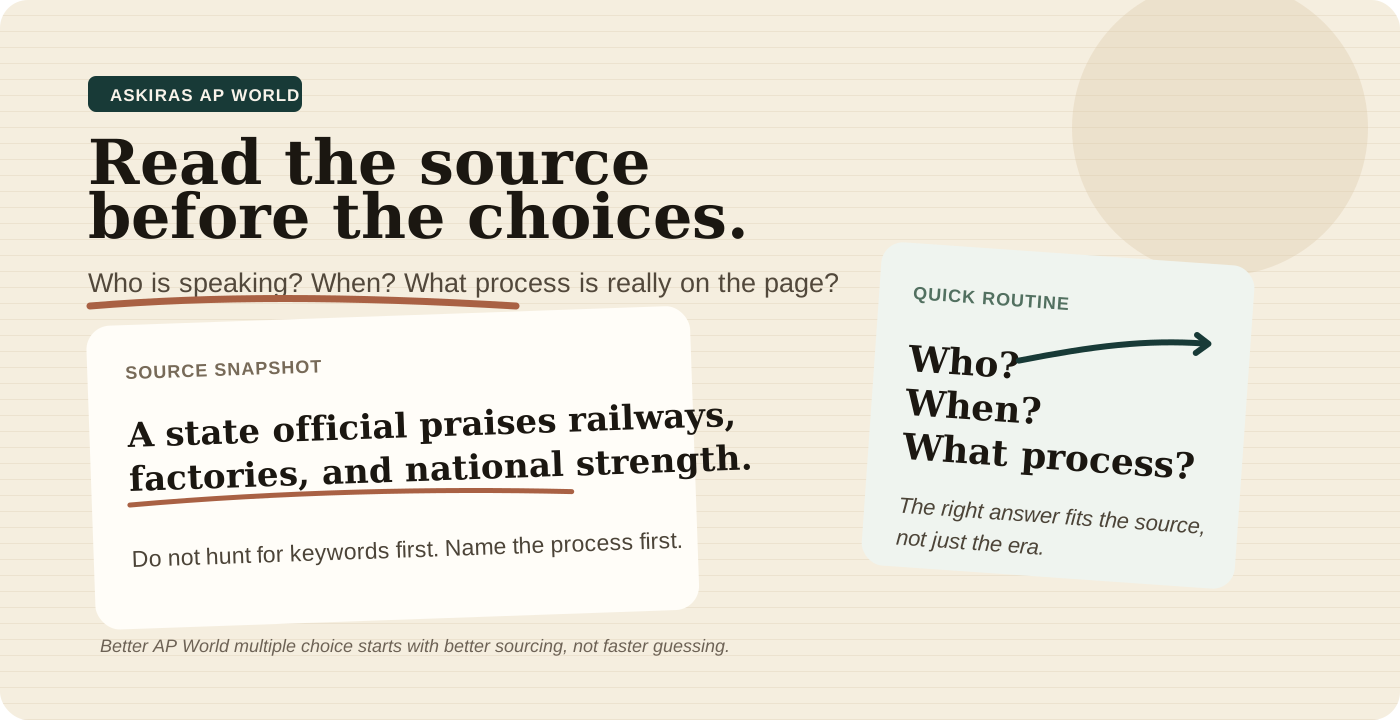
The core rule is simple: read the source before the choices.
Fast example first
Imagine a question built around this short passage:
A nineteenth-century official argues that new rail lines and factory expansion will strengthen the nation, increase state revenue, and make the country less dependent on foreign manufacturers.
And the question asks:
Which larger development is the passage most clearly responding to?
The better approach is to pause and name the source:
- speaker: a state official
- time: nineteenth century
- concern: industrial growth and national strength
- pressure in the background: foreign competition and economic dependence
Now the question is narrower. You are looking for industrialization, state-led modernization, and global economic rivalry.
The five-step routine
1. Source the document before you interpret it
Ask these first:
- Who is speaking?
- When?
- From what position?
- About what?
You just need enough context to know what kind of answer would fit.
2. Name the historical process
Before you look at the choices, say what the source is mostly about in blunt terms:
- state centralization
- imperial expansion
- labor exploitation
- religious legitimation
- industrialization
- anti-colonial resistance
- commercial exchange
That one move prevents you from treating the source like a pile of details.
3. Read the question stem carefully
The stem changes the task.
It may ask for:
- the broader development reflected in the source
- the most likely historical context
- the intended audience or purpose
- the most likely effect of the process described
Those are not interchangeable.
A student can understand the source and still miss because they answered a different question.
4. Use the choices to confirm, not to discover
The answer choices should help you verify your read of the source. If you enter them without a prediction, every answer starts to look vaguely plausible.
5. Reuse the source across the whole set
Stimulus-based sets often tie multiple questions to the same source. Do not reread from zero every time.
After question one, you should already know:
- the speaker
- the rough context
- the main issue
That lets later questions move faster.
A worked example
Try a more AP World-shaped stimulus:
A merchant from the Indian Ocean world describes a port city where Muslim, Hindu, and Christian traders exchange textiles, spices, and silver, while local rulers compete to tax and protect maritime trade.
Question: Which development best explains the kind of city described in the passage?
Start with the source:
- speaker: merchant
- setting: Indian Ocean trade world
- activity: long-distance commerce
- key ideas: mixed religious communities, port city, rulers competing over trade
What process is this really about?
- intensifying maritime trade networks
- commercial exchange linking Afro-Eurasia
- state interest in taxing and controlling trade
Now imagine a tempting wrong answer:
“The spread of pastoral nomadism across Central Asia.”
That is historical. It is just not what this source is about.
A better answer would point to the growth of Indian Ocean commercial networks and the states that benefited from them.
The point is staying loyal to the source.
The four trap types that keep costing points
1. True, but not this source
This is the classic AP World trap. The answer choice names a real development from the era, but not the one most directly tied to the document.
If the source is about commercial taxation in port cities, an answer about land-based empire expansion somewhere else may be historically adjacent but still wrong.
2. Right region, wrong time
Students spot the geography and relax too early.
Indian Ocean trade in one era is not the same as industrial imperialism in another. A good answer needs both the place and the period to fit.
3. One keyword bait
A source says “manufacturing” and the student clicks anything about factories. A source says “silver” and the student grabs any answer involving global bullion flows.
One word is not the whole source. Read the argument, not just the noun.
4. Background fact instead of best explanation
Sometimes a choice is technically connected, but it is too broad or too indirect.
The AP exam usually wants the explanation that most directly fits the source and stem, not the first true background statement you recognize.
What to do when the source is visual
Ask:
- what is changing?
- what comparison is being shown?
- what larger process could produce this pattern?
If a map shows expanding trade routes, migration flows, or imperial reach, your job is still the same: place the evidence inside a historical process.
The same source-reading habit is what carries SAQs and DBQs; once stimulus MCQs feel calmer, the next move is the AP World SAQ strategy and the AP World DBQ strategy.
What to do when two questions share one stimulus
Do not treat each question like a brand-new encounter.
Instead, make a tiny mental or scratch-note summary:
- speaker
- time
- topic
- likely process
That summary will carry across the set.
This matters even more on a digital exam because screen rereading is slower than students expect.
A short drill method that actually helps
If you want to get better at AP World MCQs, do not just score the question and move on.
After each miss, write:
- What was the source mainly about?
- What clue in the source mattered most?
- Why was my choice tempting?
- Why did the credited answer fit better?
It teaches you whether the problem was:
- weak sourcing
- weak context
- a bad stem read
- attraction to a merely related answer
The next useful move
If AP World multiple choice feels slippery, do not answer faster. Name the speaker, the process, and the actual task before the choices get a vote.
For the bigger picture on how stimulus MCQs sit inside the rest of the exam, see the AP World exam guide and the AP World study strategy.
Frequently asked questions
Should I read the answer choices before I read the stimulus?
Usually no. In AP World, the source is where the real signal lives. If you read the choices first, you are more likely to get baited by familiar but only partly relevant history.
What is the fastest way to place an AP World source in context?
Ask four things quickly: who is speaking, when, where, and what problem or process the source is really about. That is usually enough to narrow the field fast.
Why do I miss stimulus-based MCQs even when I know the content?
Usually because the wrong answer is historically true but not the best fit for that specific source, time period, or question stem. AP World multiple choice rewards precise sourcing more than loose familiarity.
Keep going in this exam
Other guides at Askiras
If you are also prepping another exam, these short guides cover the same "name the pattern, then practice" habit.