How to Study AP Biology Without Turning It Into Flashcards
AP Biology sticks better when you study processes, evidence, and experiments together. Build a system that helps you read graphs and explain mechanisms.
Read it to name the pattern, then practice while it is still fresh.
Prepared by Askiras editorial team. These guides stay short on purpose: one pattern, one worked example, one clear next step into practice. How we build guides.
Uses public AP course and exam context; does not reproduce protected College Board prompts.
College Board AP context, Askiras independence, and no unsupported outcome claims.
What is the best way to study AP Biology?
Pair each mechanism with evidence and expression: explain what changes, read a graph or model about it, then write a short answer using the data. Flashcards help vocabulary, but they do not replace evidence-based practice.
AP Biology gets studied like a stack of facts and tested like a science class
That mismatch is where a lot of frustration comes from.
Students often prepare for AP Biology by doing what feels school-like:
- rereading notes
- highlighting packets
- drilling definitions
- making bigger and bigger Quizlet decks
Then the test shows up with a graph, a model, or an experimental setup, and suddenly the issue is not vocabulary. The issue is whether you can think with the biology.
Flashcards still have a place. They just need a job. If a card does not send you back to a process, a figure, or a distinction that shows up on the exam, it usually turns into storage instead of preparation.
The study model that actually transfers to the exam
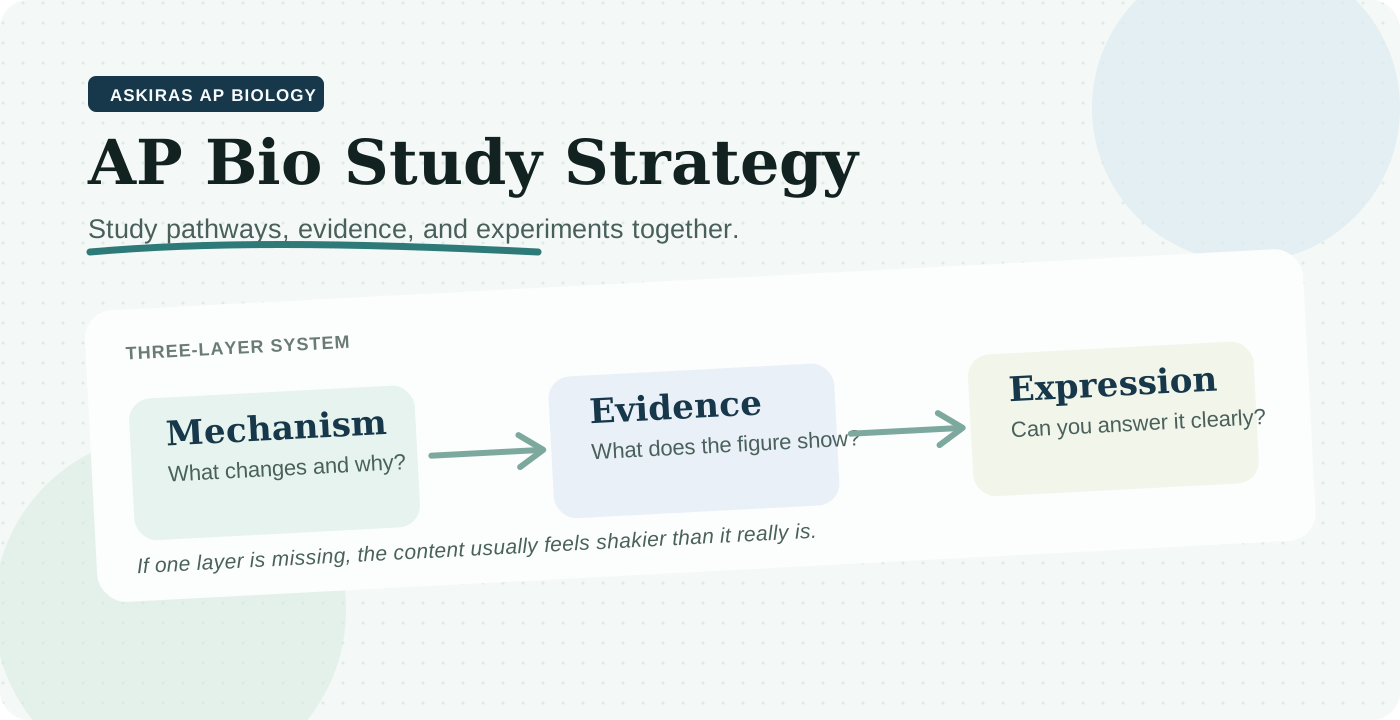
The cleanest study system for AP Bio has three layers:
- mechanism
- evidence
- expression
If one layer is missing, the whole thing feels shakier than it should.
Layer 1: mechanism
This is the “what is actually happening?” layer.
If the topic is membrane transport, gene regulation, cellular respiration, or natural selection, you should be able to explain:
- what changes
- what causes the change
- what direction the process moves in
- what would happen if one condition shifted
That explanation should sound more like a chain of cause and effect than a list of terms.
For example, if ATP production falls after oxygen drops, do not stop at “less respiration.” Be able to say why oxygen matters in aerobic respiration and what that does to downstream ATP output.
Layer 2: evidence
This is the layer many students skip for too long.
Once you learn a topic, pair it with a figure:
- a graph
- a table
- a model
- a microscopy image
- a short experiment
If you just studied enzymes, look at a graph of reaction rate under different temperatures or pH levels. If you just studied heredity, interpret a pedigree, a cross, or a data table. If you just studied ecology, compare population changes or nutrient effects.
The rule is simple: every major topic should live next to evidence, not just next to notes.
Layer 3: expression
This is the part where you turn your reasoning into AP-style language.
Can you answer:
- identify
- describe
- explain
- predict
- justify
without wandering?
AP Biology free responses are usually not hard because students know nothing. They are hard because students know something but cannot state it cleanly under time.
A weekly system that actually fits the class
You do not need a dramatic AP Bio routine. You need a repeatable one.
Here is a better weekly loop.
1. Build one unit map
At the start of the week, condense the current unit onto one page:
- key processes
- key distinctions
- common visuals
- common experimental language
If the page gets too crowded, the unit is still too blurry. The exam is going to compress it later anyway, so your notes should get compressed on purpose.
2. Pair that unit with figures
Do one short figure set from the same unit:
- two graphs
- one model
- one table or experiment
Do not just answer the question. Say out loud what the figure is showing and what evidence supports the claim.
3. Write one short response from evidence
Take one graph or experiment and answer a short AP-style prompt. Keep it focused. The goal is not a beautiful paragraph. The goal is:
- one precise claim
- one cited piece of evidence
- one biological explanation
4. Review misses by type, not by chapter
When you miss a question, sort the miss:
- content gap
- graph-reading gap
- experimental-design gap
- wording gap
That review is much more useful than telling yourself, “I need to study harder.”
Example: how one topic should be studied
Take enzyme activity.
A weak study version looks like this:
- define enzyme
- define substrate
- memorize active site
A stronger AP Bio version looks like this:
- explain why temperature or pH changes enzyme shape and function
- read a graph of reaction rate under different conditions
- predict what would happen beyond the tested range
- write one sentence using evidence from the graph and one sentence explaining the mechanism
That is how the chapter becomes usable.
What not to do
Do not treat all misses as content misses
A lot of AP Bio errors are reading errors. Students know the topic, but they:
- misread the axis
- ignore the control
- compare the wrong groups
- choose an answer that sounds true but is not supported by the figure
Do not study every unit at the same temperature
AP Biology is broad, but some areas show up more heavily and more often in data-heavy contexts.
Spend extra time on:
- cellular energetics
- gene expression and regulation
- natural selection
- recurring graph and experiment work across all units
Do not wait to practice writing
If your first real FRQ week is right before the exam, the writing itself becomes the stressor. You want scientific wording to feel normal long before then.
What to do in the final month
In the last month, shift from “learn more chapters” to “make exam jobs cleaner.”
That means:
- short multiple-choice sets with figures
- short FRQ parts from graphs and experiments
- quick process explanations from memory
- targeted review of repeated mistakes
The best AP Biology review in the final stretch looks less like rereading and more like rehearsal.
The simple test for whether your AP Bio prep is working
After a study session, ask:
- Can I explain the process?
- Can I read the evidence?
- Can I write the answer cleanly?
If the answer is only yes to the first one, the session was incomplete.
AP Biology gets lighter when content, data, and wording stop living in separate rooms.
Frequently asked questions
Should I still make flashcards for AP Biology?
Yes, but only for terms that unlock a process or distinction. Flashcards help with vocabulary. They do not replace diagram work, graph reading, or short written explanation.
What if I understand class notes but blank on FRQs?
That usually means the biology is still separated from the evidence. Practice answering from graphs, tables, and models instead of reviewing content in isolation.
How often should I write AP Biology free responses?
A good weekly rhythm is two or three short FRQ parts plus one longer question or outline. That is enough repetition to build precision without turning every study session into a full mock exam.
Keep going in this exam
Other guides at Askiras
If you are also prepping another exam, these short guides cover the same "name the pattern, then practice" habit.