AP Biology Guides
Use this hub by the miss you just saw: a graph you read too fast, a control you could not explain, or an FRQ answer that got long without earning the point.
Read the figure, not the textbook
AP Biology scores hinge on whether you can read graphs and experimental designs, not on whether you can recite pathways. The last two redesigns tilted the exam toward the science practices: data analysis, experimental reasoning, model-based predictions. Students who treat AP Bio like a vocabulary class and memorize Krebs in detail still lose three or four free-response points to a single graph they read sloppily under time.
These guides are built around that observation. The graphs-and-data guide turns axis reading into a 3-step routine. The experimental-design guide names the specific moves the exam is rewarding (independent variable identification, control reasoning, replicate logic). The FRQ strategy guide focuses on the rubric points that actually exist, not on the "show how much you know" answers that look impressive but earn zero.
If you only have time for one guide before your next AP Bio practice test, read the graphs-and-data one. The same figure-reading move shows up inside FRQs, where every long response includes a visual, data set, or experiment.
Was the miss data, design, or explanation?
Do not restart the whole course after one AP Bio miss. Pick the guide that matches the failure mode, then write the next answer in a shorter evidence-first form.
- Graph or table miss: read axes, controls, trend, and comparison before the claim.
- Experimental-design miss: name the variable, control, constants, replicates, and what the setup can prove.
- FRQ miss: answer the command verb, cite the data, then add the mechanism sentence.
Use one missed Bio question to choose the next guide
Featured guide
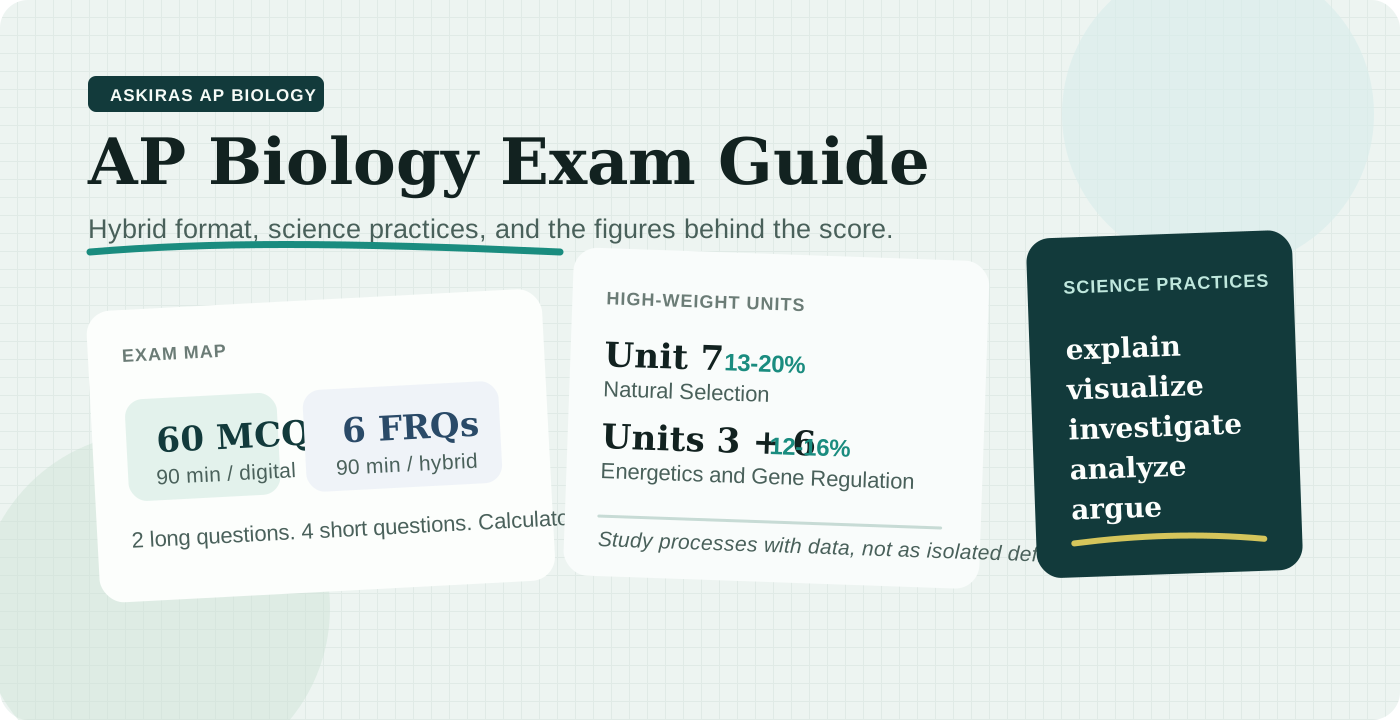
AP Biology Exam Guide: 2026 Format and FRQs
AP Biology exam guide to the 2026 hybrid digital format: 60 MCQs, 6 FRQs, unit weights, science practices, and what to practice first.
Read this first
Read these next
These AP guides connect the hub overview to the concrete scoring moves students practice most often.
Find the guide by scoring task
Use these when you know the task you keep missing and want the strongest guide first, then a second guide that reinforces the same move.
How to use this hub
Step 1
Use the exam guide if the hybrid format, science practices, or long-versus-short FRQ mix still feels fuzzy.
Step 2
If your last miss involved a visual, start with graphs and data before rereading vocabulary.
Step 3
If your last miss was an FRQ, write one shorter answer that uses the command verb, evidence, and mechanism.
Other Askiras study hubs
If this is not the exam you are working on today, jump directly to another study hub.