LSAT guide: LR gaps, flaws, and assumptions
Use this hub if LR still feels blurry. Then move into specific question types, worked examples, and short drills.
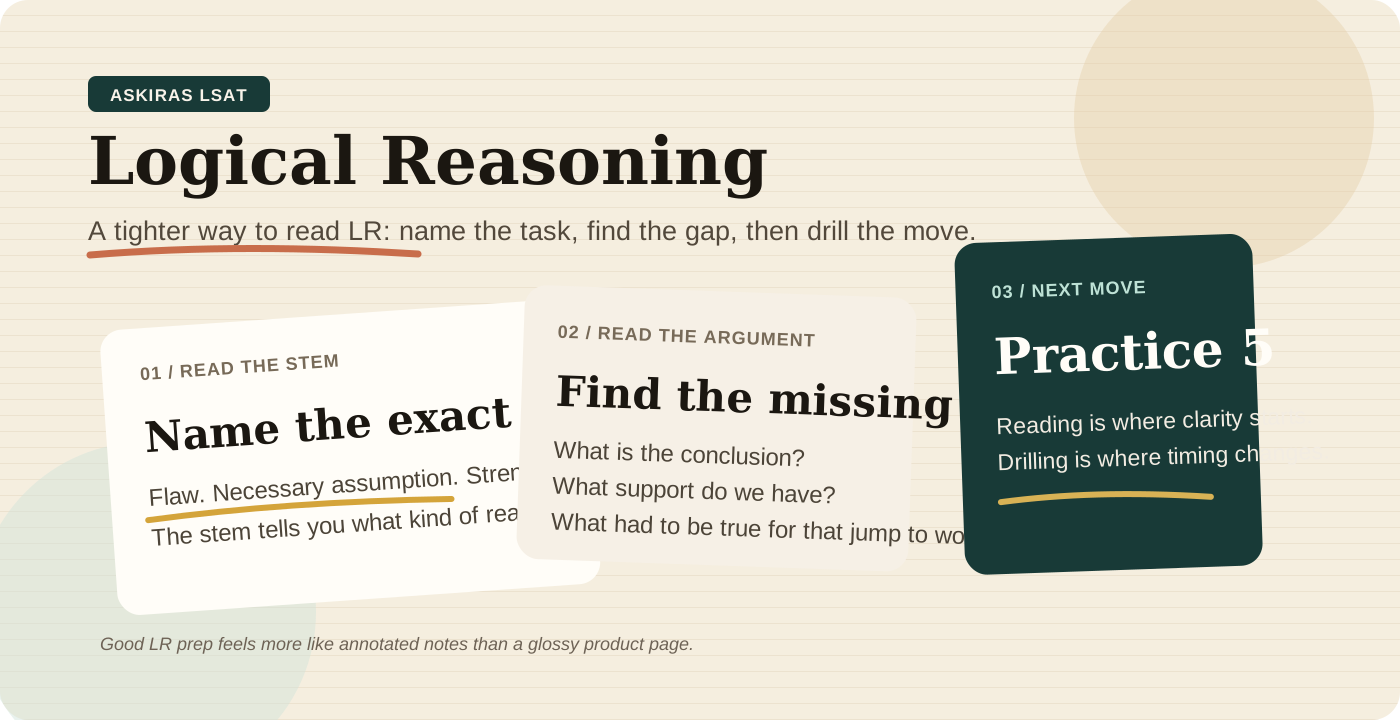
Pick the route by what answer choices did to you
If the answer choices felt identical, skip more mixed LR for now. Use the question family that exposed the problem, then review the miss by cause.
- Flaw miss: prephrase the bad move before reading abstract wording.
- Assumption miss: state the gap between support and conclusion before testing answers.
- Weaken or strengthen miss: decide what would change the argument, not the topic.
Featured guide
LSAT Logical Reasoning: How to See the Pattern Faster
LSAT Logical Reasoning gets easier when you can name the task, spot the gap, and stop letting the choices do the thinking.
Read this first
Read these next
These LSAT guides connect the hub overview to the comparison, calculator, and review questions students ask most often.
Find the guide by scoring task
Use these when you know the task you keep missing and want the strongest guide first, then a second guide that reinforces the same move.
How to use this hub
Step 1
Read the LR overview if the section still feels blurry.
Step 2
Then pick the family that matches the last miss: flaw, assumption, weaken, strengthen, main point, or parallel.
Step 3
Move into timed drilling only after you can name the miss in one plain-English sentence.
More guides for this exam
Other Askiras study hubs
If this is not the exam you are working on today, jump directly to another study hub.