LSAT Parallel Reasoning Questions: Match the Skeleton, Not the Topic
Parallel reasoning gets easier when you ignore the topic, strip the argument down, and match the structure underneath it.
Read it to name the pattern, then practice while it is still fresh.
Prepared by Askiras editorial team. These guides stay short on purpose: one pattern, one worked example, one clear next step into practice. How we build guides.
Uses public LSAT question-type strategy context; does not reproduce protected LSAC questions.
LSAC LSAT context, Askiras independence, and no unsupported outcome claims.
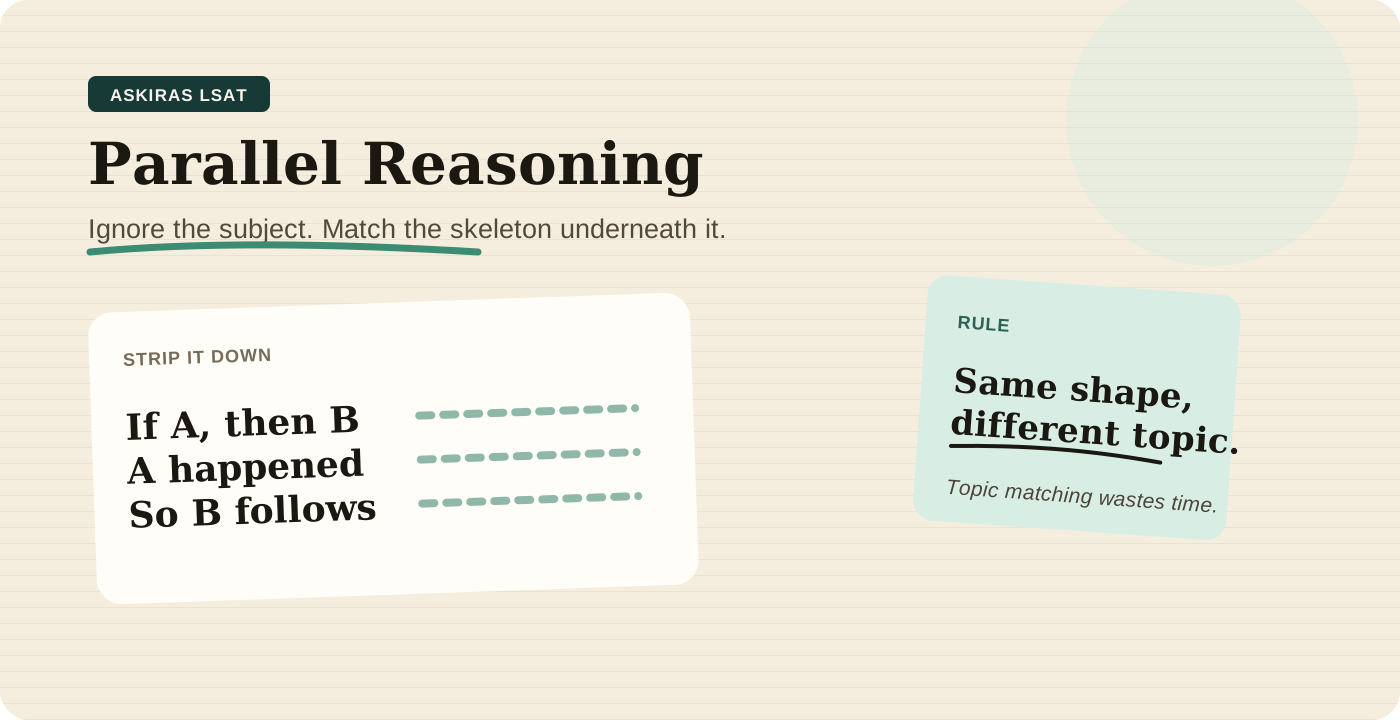
Parallel reasoning is a skeleton match
Students lose time on these questions because they keep looking for a topic match.
That is the wrong instinct.
The correct answer does not have to talk about the same people, policy, or subject. It has to mirror the same reasoning pattern.
That is the whole game.
Worked example
A manager says the new scheduling software is reliable because it worked in the pilot store. The pilot store had the same staffing model as the other stores, so the software will work everywhere.
Strip that down.
Possible skeleton:
- this worked in one tested case
- the tested case was like the others in a relevant way
- therefore it will work in the others too
Now compare answer choices by structure, not by topic.
The right answer might be about a vaccine, a school policy, or a shipping route. That does not matter. If it repeats the same logical move, it is the match.
What you are actually looking for
Parallel reasoning questions ask:
Which choice has the same argument form?
That means you want to compare:
- premise structure
- conclusion structure
- any causal, conditional, or quantified move in between
Not:
- the topic
- the vocabulary
- whether the example sounds familiar
How to strip an argument fast
1. Find the conclusion
What is the author trying to establish?
2. Find the support
What facts are being used to get there?
3. Reduce the language
Turn the argument into a short skeleton.
Examples:
- if A, then B; A; therefore B
- some A are B; some B are C; therefore some A are C
- most A are B; this one is A; therefore this one is probably B
- X happened after Y; therefore Y caused X
4. Match the shape, not the story
Once you have the skeleton, the topic becomes noise.
If the answer shares the same move, it belongs in the conversation. If not, it is a trap.
A second mini example
A teacher says the new homework policy is unfair because the students who complained about it are the same students who usually turn work in late. Therefore, the policy must be the cause of the complaints.
Skeleton:
- a group has a trait
- the group complains
- therefore the policy caused the complaints
That structure is doing a lot of work.
The right parallel choice does not need to mention homework at all. It needs to copy the same reasoning move, including any bad leap from correlation to causation or from one group to a broad conclusion.
Common traps
Topic match without structure match
This is the biggest one.
An answer can mention the same industry, the same city, or the same kind of person and still be wrong if the reasoning differs.
Structure match with one hidden change
A choice may look close but quietly switch:
- all to some
- some to all
- cause to coincidence
- probability to certainty
- one case to many cases
Those changes matter.
Getting distracted by extra details
Parallel reasoning choices often add extra facts.
Ignore the decorative parts unless they change the logic. Ask what the argument is actually doing.
A simple comparison habit
After you reduce the stimulus, check the answer choices with one question:
Is the reasoning pattern the same?
Not:
- is the topic familiar
- is the wording similar
- does it feel related
If the pattern is the same, keep it. If the pattern changes, drop it.
Why these questions feel harder than they are
The test disguises a simple task with a lot of prose.
Students think they are reading a content question. They are not. They are doing pattern recognition.
The faster you can abstract the stimulus, the less the wording can distract you.
That is why a rough skeleton is enough. You do not need a perfect diagram. You need a usable one.
Review method
When you miss one, write:
- The stimulus skeleton was:
- The correct answer matched because:
- My wrong pick failed because:
That first line is the important one.
If you cannot reduce the stimulus to a clean skeleton, you are still relying too much on surface details.
Short drill plan
If parallel reasoning questions are slowing you down:
- do 8 questions in a row
- write the skeleton for each stimulus before looking at the choices
- label the pattern in one short phrase, like “cause claim” or “bad generalization”
- after each miss, note the one feature that broke the match
Then repeat the set a few days later.
The point is not to memorize answer choices. The point is to get faster at seeing the underlying argument shape before the options start pulling you off track.
Frequently asked questions
Do parallel reasoning questions care about the topic?
Not much. The correct answer can be about anything as long as the reasoning pattern matches.
Should I translate every argument into symbols?
Not every time, but you should strip it down to a short skeleton like 'if A then B, A, therefore B.'
Why do parallel reasoning choices feel unrelated?
Because the LSAT often hides the match under different subject matter. Surface difference is normal. Structure is what matters.
Keep going in this exam
Other guides at Askiras
If you are also prepping another exam, these short guides cover the same "name the pattern, then practice" habit.