LSAT Necessary Assumption Questions: What the Argument Has to Believe
Necessary assumption questions ask what the argument needs to stay standing. Here is how to find it without chasing flashy traps.
Read it to name the pattern, then practice while it is still fresh.
Prepared by Askiras editorial team. These guides stay short on purpose: one pattern, one worked example, one clear next step into practice. How we build guides.
Uses public LSAT question-type strategy context; does not reproduce protected LSAC questions.
LSAC LSAT context, Askiras independence, and no unsupported outcome claims.
How do you answer LSAT necessary assumption questions?
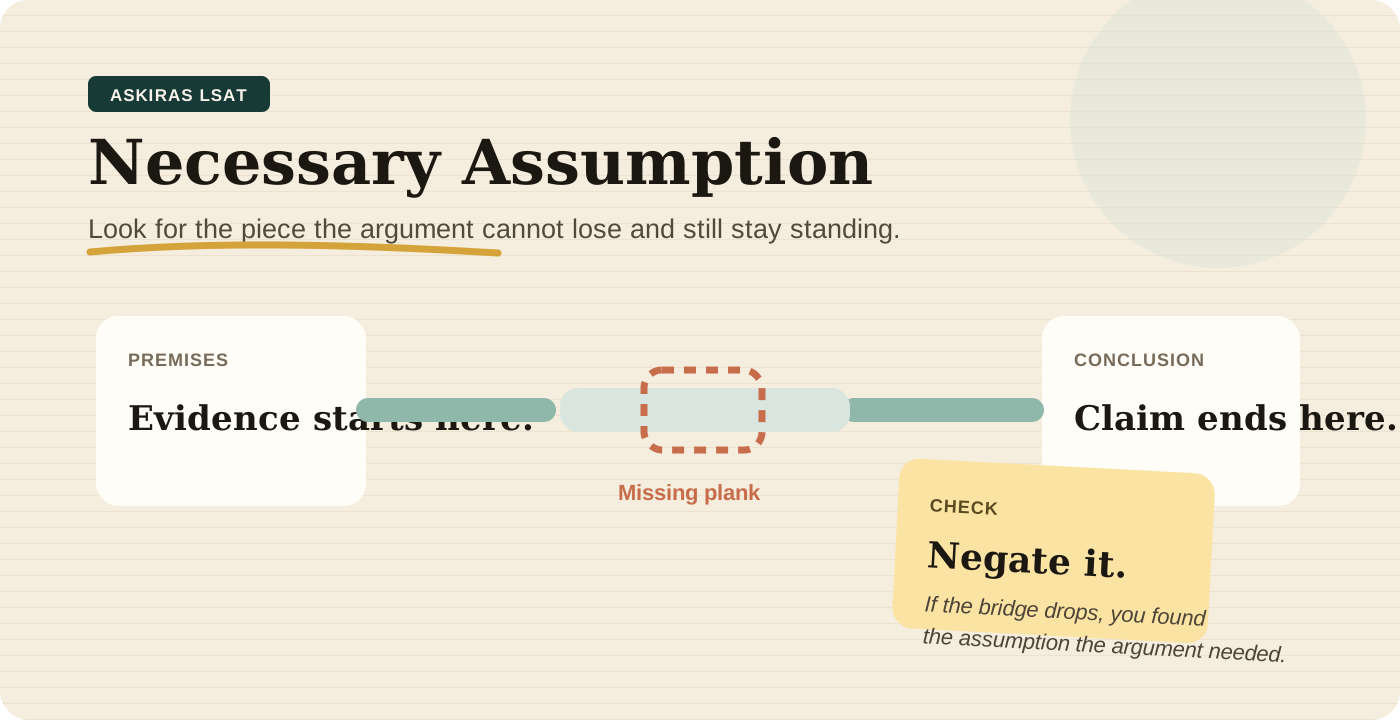
Find the argument's conclusion, name the gap, then test answer choices by negating them. A necessary assumption is required for the argument to stand; a merely helpful answer is usually too strong or too optional.
Necessary assumption questions punish one very common mistake
This is the question family where students confuse helpful with required.
Students often choose an answer that helps the argument. But the question is stricter than that.
It wants the statement the argument needs.
That means the right answer is not the most powerful thing you could add. It is the thing you cannot take away without damaging the argument.
The core test: if you negate it, does the argument wobble?
Necessary assumption questions get much easier when you use the negation test.
Ask:
If this answer were false, could the conclusion still stand?
If the answer being false wrecks the argument, you are probably looking at the necessary assumption.
If the argument still mostly works, the answer was helpful, not required.
Worked example
A law school admissions consultant argues that applicants should spend more time revising their personal statements than retaking the LSAT, because a stronger personal statement can make an application stand out in a crowded pool.
Conclusion:
- applicants should spend more time revising their personal statements than retaking the LSAT
Support:
- a stronger personal statement can make an application stand out
Possible gap:
The argument seems to assume that time spent revising the statement is, for these applicants, more likely to improve outcomes than time spent trying to improve the LSAT score.
Now test an answer:
“For the applicants in question, retaking the LSAT is not likely to produce an admissions advantage larger than the one produced by improving the personal statement.”
Negate it:
“For the applicants in question, retaking the LSAT is likely to produce an admissions advantage larger than the one produced by improving the personal statement.”
If that negation were true, the argument would be in real trouble. That is a good sign we found the necessary assumption.
The trap: necessary assumption vs strengthen
This is the classic mix-up.
A strengthen answer:
- makes the argument better
- can be strong, exciting, decisive
A necessary assumption answer:
- can be modest
- can feel less flashy
- just has to be required
Think of it this way:
- strengthen = helpful
- necessary assumption = load-bearing
What the right answer usually looks like
Necessary assumptions usually do one of three quiet jobs:
1. Bridge the gap
They quietly connect the premise to the conclusion.
2. Rule out a damaging possibility
They make sure an obvious objection does not destroy the argument.
3. Preserve comparability
They ensure the comparison the argument depends on is fair enough to support the conclusion.
A clean solving method
1. Find the conclusion
What is the author trying to prove?
2. Find the support
What evidence is actually given?
3. Ask what must be true for that move to work
Not:
- what would help the most
But:
- what must the author be taking for granted
4. Use the negation test on contenders
If negating the answer does not hurt the argument much, it was not necessary.
Mini example: why flashy answers are dangerous
Stimulus idea:
A museum should extend weekend hours because attendance increased after it added a Friday evening program.
Tempting strengthen answer:
- “Visitors who attend Friday evening programs are especially likely to return on weekends.”
That helps. But it might not be required.
More necessary answer:
- “The weekend attendance increase was not caused entirely by some unrelated factor, such as a temporary tourism surge.”
If that were false, the original reasoning becomes much weaker.
Why this question type slows students down
Necessary assumption questions often feel slippery because the credited answer can look underwhelming.
Students expect the right answer to feel powerful. Instead it often just keeps the argument from collapsing.
That is why the negation test is so useful. It forces you to evaluate the answer by necessity, not by dramatic effect.
A second quick example
A university claims that its new writing seminar improved student writing because the average essay score rose after the seminar was introduced.
One possible necessary assumption:
- the scoring standard did not become easier after the seminar was introduced
Why?
Because if the rubric got easier, the score increase stops proving what the university wants it to prove.
That answer does not sound glamorous. It just blocks a serious alternative explanation.
Common traps
Answers that are too strong
Necessary assumptions do not need to guarantee the conclusion.
Answers that merely restate a premise
If the statement is already given, it is not an assumption.
Answers that would be nice to have
Helpful is not the same as required.
Answers outside the argument’s lane
If the answer introduces a new issue the argument never relied on, it is probably a distraction.
How to review these well
When you miss one, write:
- What gap was the argument crossing?
- Which answer looked attractive because it strengthened?
- Why was the credited answer actually required?
That review habit fixes the real problem: confusing “better” with “necessary.”
Short drill plan
If this question family is costing you points:
- do a small set of necessary assumption questions only
- run the negation test on every serious contender
- write down whether your miss came from picking a strengthen answer, a premise restatement, or an answer that was too broad
That pattern language is what helps on the next set.
Frequently asked questions
What is the biggest mistake on necessary assumption questions?
Choosing an answer that helps the argument instead of one the argument truly needs. Helpful is not the same as required.
Should I always use the negation test?
You do not need it on every question, but it is one of the best tie-breakers when two answers feel close.
Why do necessary assumption answers often feel weaker than strengthen answers?
Because they do not need to improve the argument dramatically. They only need to be load-bearing enough that the argument struggles without them.
Keep going in this exam
Other guides at Askiras
If you are also prepping another exam, these short guides cover the same "name the pattern, then practice" habit.