AP Psychology Guides
Use this hub when AP Psychology feels like a pile of terms until a scenario, study, or source set asks you what the evidence actually proves. These five guides cover the places where the exam scores you, and AP Psych trainer is live for short scenario drills.
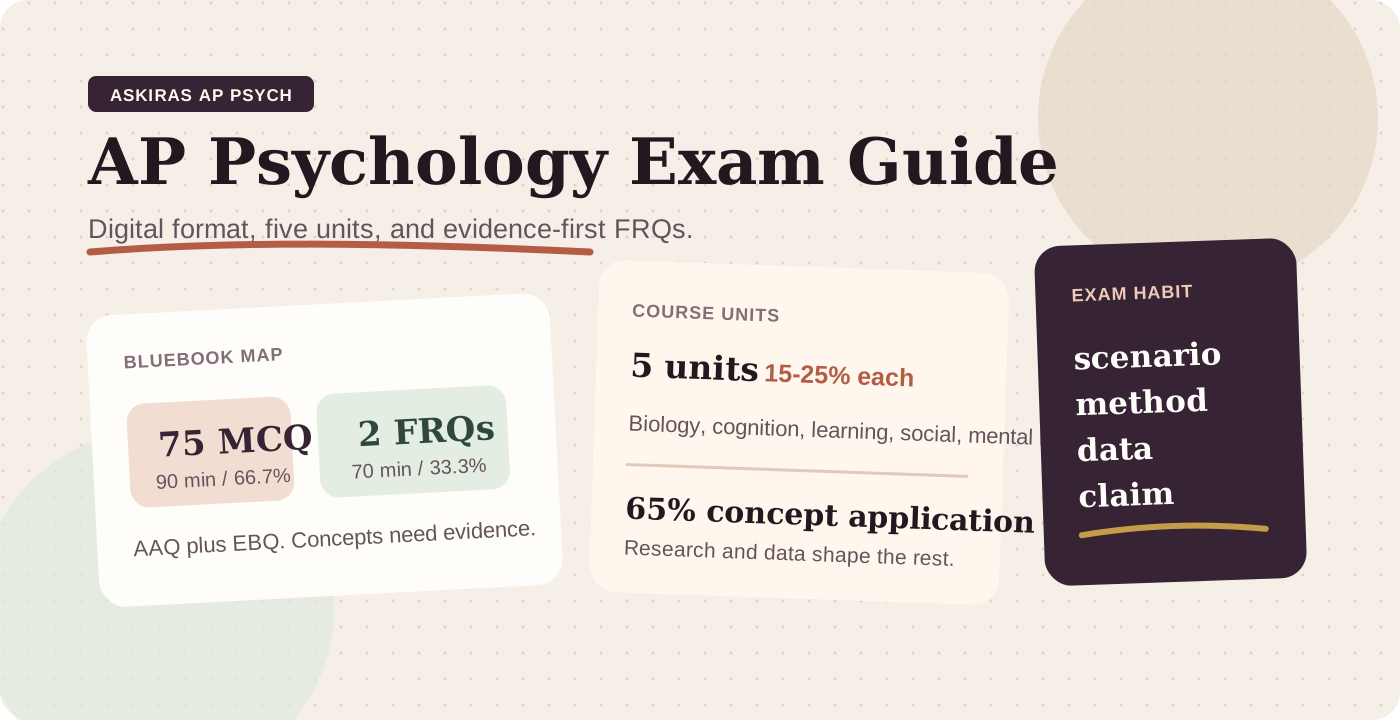
Apply the concept, then defend the evidence
AP Psychology now rewards applied scientific reasoning more than old-school term recall. The multiple-choice section still asks for concepts, but the strongest questions hide those concepts inside student decisions, research setups, graphs, and everyday behavior. Students who can define reinforcement, working memory, or conformity still miss points when they cannot say what the scenario changes, what the study can conclude, or which evidence actually supports the claim.
These guides are built around that shift. The research-methods guide turns variables, operational definitions, sampling, ethics, correlation, and data displays into a short checklist. The AAQ guide focuses on reading one summarized article without drowning in details. The EBQ guide treats the FRQ as an evidence argument: make a claim, choose the right source, explain why it supports you, and keep the psychology precise.
If you only have time for one guide before your next AP Psych practice set, read the research-methods-and-data guide. Research design shows up across MCQs and directly inside the Article Analysis Question.
Use AP Psych guides by task, not by term list
Use the exam guide if the digital AAQ/EBQ split is still confusing. If the exam is close, use the last-week plan. If you already know the format, go straight to research methods, AAQ, or EBQ based on the kind of point you keep losing.
- Last week: research methods, scenario MCQs, AAQ, EBQ, and miss cleanup.
- Research methods: variables, sampling, ethics, correlation, and data displays.
- AAQ: read one summarized study for method, limits, and generalizability.
- EBQ: build a claim from source evidence without overstating it.
Choose the AP Psych guide by the evidence problem
Featured guide
AP Psychology Exam Guide: 2026 Format and FRQs
AP Psychology exam guide to the 2026 digital format: 75 MCQs, AAQ and EBQ FRQs, unit weights, research methods, and what to practice first.
Read this first
Read these next
These AP guides connect the hub overview to the concrete scoring moves students practice most often.
Find the guide by scoring task
Use these when you know the task you keep missing and want the strongest guide first, then a second guide that reinforces the same move.
How to use this hub
Step 1
Use the exam guide if the fully digital format, five-unit course, or AAQ-versus-EBQ split still feels fuzzy.
Step 2
Then study AP Psych through scenarios and studies: identify the behavior, name the concept, and explain the evidence.
Step 3
Move into AP Psych trainer while the research-methods checklist or AAQ/EBQ evidence pattern is still fresh.
More guides for this exam
Other Askiras study hubs
If this is not the exam you are working on today, jump directly to another study hub.