AP Euro Multiple Choice: How to Read Texts, Art, and Cartoons Fast
AP Euro multiple choice punishes loose reading. This method works across speeches, paintings, political cartoons, tables, and short historical excerpts.
Read it to name the pattern, then practice while it is still fresh.
Prepared by Askiras editorial team. These guides stay short on purpose: one pattern, one worked example, one clear next step into practice. How we build guides.
Uses public AP course and exam context; does not reproduce protected College Board prompts.
College Board AP context, Askiras independence, and no unsupported outcome claims.
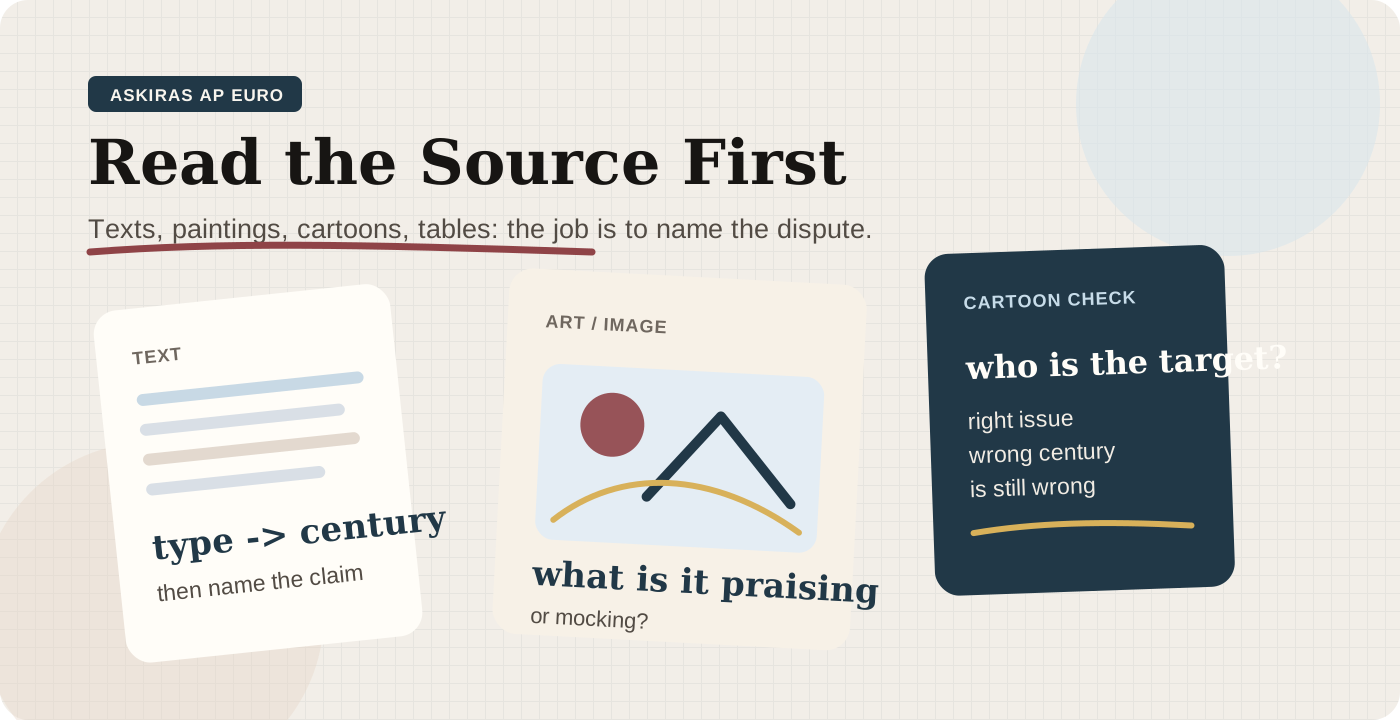
AP Euro multiple choice is really a source-reading section with history underneath it
Students miss AP Euro multiple-choice questions for the same reason over and over: they recognize the topic before they identify the source.
That is dangerous on this exam because the source might be doing something narrower than the topic suggests.
A painting is not just “about monarchy.” A pamphlet is not just “about the Reformation.” A political cartoon is not just “about industrial society.”
Each source is usually making an argument, mocking an opponent, defending a reform, or revealing a fear.
If you catch that job first, the choices get much easier.
Try this on a visual source
Imagine a cartoon showing a thin peasant bent under the weight of two large figures labeled clergy and nobility.
A weak read is: “This is about inequality in France.”
That is true, but it is still loose.
A better read is:
- source type: political cartoon
- likely period: late eighteenth century
- target: privileged estates
- main criticism: the burden of taxation and social hierarchy falls on the Third Estate
Now the likely context is much narrower. You are in the world of Old Regime privilege, fiscal strain, and revolutionary grievance.
That is the level of specificity AP Euro likes.
The five-step source routine
1. Identify the source type
Ask what kind of evidence you are looking at:
- philosophical excerpt
- royal decree
- chart or table
- painting
- political cartoon
- reform speech
- treaty language
Source type matters because it shapes what the question can reasonably ask.
2. Place it in a rough period
You do not always need the exact year. You do need the right historical neighborhood.
Ask:
- pre-Reformation or post-Reformation?
- Enlightenment or Romantic?
- industrial or pre-industrial?
- interwar or Cold War?
Wrong century, wrong answer.
3. Name the conflict or claim
This is the big one. What is the source trying to do?
Maybe it is:
- defending royal authority
- criticizing clerical privilege
- praising reason and reform
- warning against revolution
- celebrating the nation
- condemning urban misery
If you cannot name the conflict, every answer choice stays too plausible.
4. Read the question stem after you have a view
The stem changes the task. It may ask for:
- the historical context
- the most likely audience
- the broader development reflected
- a likely consequence
Students lose points when they understand the source but answer the wrong question.
5. Use the choices to confirm, not to guess
The choices should verify your read, not invent it for you.
Once you already know “this is a critique of Old Regime privilege,” a choice about the growth of revolutionary hostility to the estates system becomes easier to trust.
AP Euro source types have different traps
Text excerpts
The trap is usually vocabulary. A student sees “reason,” “natural rights,” or “sovereignty” and jumps too fast.
Slow down long enough to ask: who is making the claim and against what?
Paintings
The trap is description without interpretation. Do not stop at “there is a king” or “there is a crowd.”
Ask what the image glorifies, criticizes, or dramatizes.
Political cartoons
The trap is missing the joke. Cartoons exaggerate on purpose. Your job is to name what is being mocked or attacked.
Tables and charts
The trap is noticing the trend but not the historical process. If a table shows urban growth, wage shifts, or demographic change, connect it to industrialization, migration, public health, war, or state policy.
The four wrong-answer patterns that keep showing up
1. Right issue, wrong century
A choice can match the general topic but still fit the wrong period. That is common with religion, nationalism, and state power because those themes echo across the course.
2. Right region, wrong side
You identify France, Germany, or Russia correctly, but miss whether the source is defending change or resisting it.
3. One-keyword bait
You see “industry” and click anything about factories. You see “rights” and click anything about liberalism.
The source is usually narrower than the keyword.
4. Background fact instead of best fit
Some answers are historically true but too broad. AP Euro usually wants the most direct explanation, not the first accurate background statement you recognize.
A short drill that actually improves this skill
After every missed source-based question, write four lines:
- What kind of source was it?
- What conflict or claim was it really about?
- What made my answer tempting?
- What clue made the credited answer better?
That takes less than a minute, and it is exactly how you stop repeating the same miss.
Good AP Euro multiple choice is not magic. It is disciplined source triage.
Name the source, name the quarrel, then let the history do the rest.
Frequently asked questions
Should I read the answer choices before I study the source?
Usually no. In AP Euro, the source is where the real signal lives. If you read the choices first, you are more likely to get baited by a familiar era or thinker that does not actually fit the document.
What makes AP Euro multiple choice different from plain history trivia?
The questions are usually attached to a source, image, chart, or excerpt. The exam wants you to identify the argument, audience, and historical setting, not just recognize a keyword.
Why do political cartoons and paintings throw me off on AP Euro?
Because students often describe the image without naming the criticism or conflict behind it. In AP Euro, the image is usually taking a side in a political, religious, or social dispute.
Keep going in this exam
Other guides at Askiras
If you are also prepping another exam, these short guides cover the same "name the pattern, then practice" habit.