AP Euro DBQ Strategy: Group the Documents Before You Write
The AP Euro DBQ gets easier when you sort the packet by argument, not by document number, and make sourcing do real work.
Read it to name the pattern, then practice while it is still fresh.
Prepared by Askiras editorial team. These guides stay short on purpose: one pattern, one worked example, one clear next step into practice. How we build guides.
Uses public AP course and exam context; does not reproduce protected College Board prompts.
College Board AP context, Askiras independence, and no unsupported outcome claims.
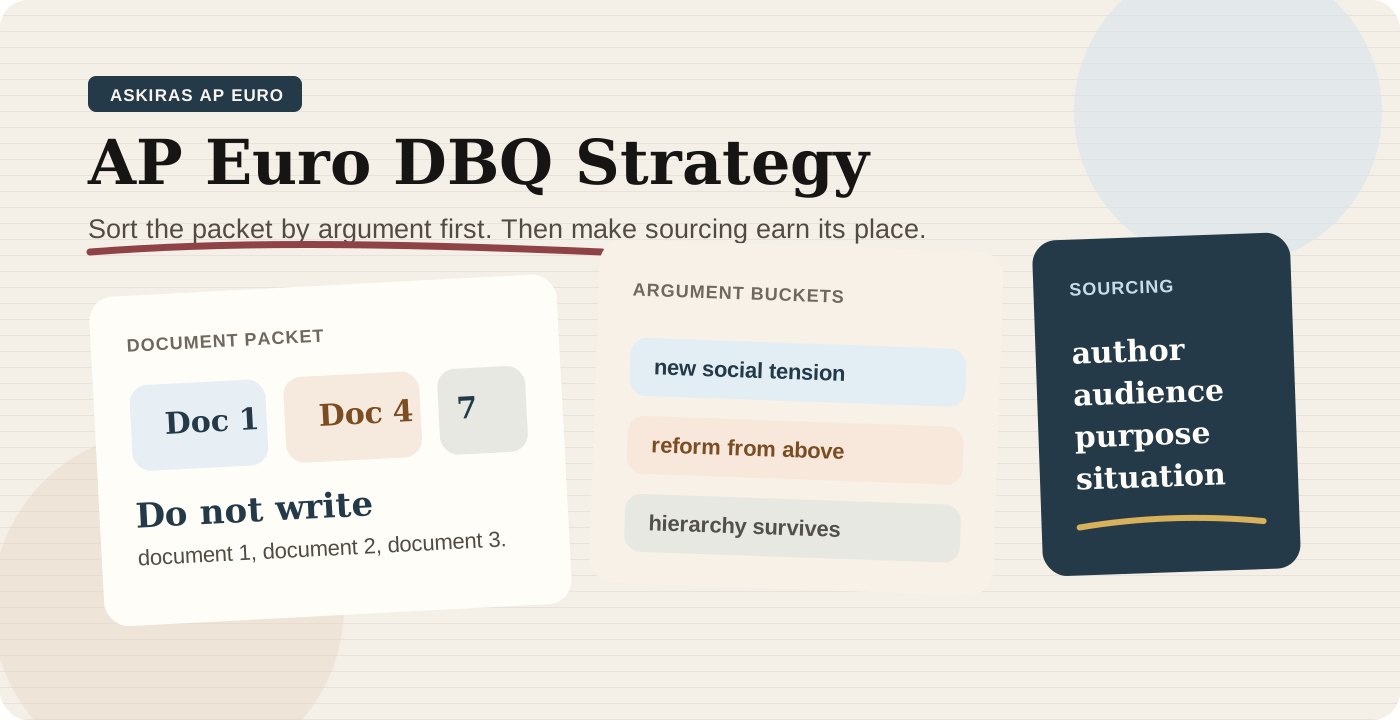
The AP Euro DBQ is mostly a packet-organization problem
Students often think the DBQ is hard because the writing has to sound impressive.
Usually it is hard because the documents were never turned into a plan.
Once the packet is grouped into an argument, the essay gets much calmer. If you start drafting before that, the DBQ usually becomes seven summaries with a thesis stapled on top.
AP Euro makes this especially obvious because the sources often carry strong voices: philosophers, reformers, monarchs, clergy, workers, nationalists, party officials.
Those voices are useful, but only if you sort them by what they help you prove.
Start with a prompt that gives you a real argument
Imagine a DBQ asking:
Evaluate the extent to which industrialization changed social relations in Europe from 1750 to 1900.
Do not begin with document summaries. Begin with a thesis that creates structure:
Industrialization changed European social relations by expanding urban wage labor and sharpening class conflict, but it did not erase hierarchy, since elites and states kept redesigning older forms of control inside the new industrial order.
That thesis gives the packet jobs. Now you can sort documents into buckets like:
- new urban labor and class tension
- state and elite efforts to manage disorder
- continuity in hierarchy or exclusion
That is already an essay.
Use the reading period to make irreversible decisions
The reading period exists so you can choose the argument before you start typing paragraphs.
A strong first pass looks like this:
- Read the prompt slowly enough to catch the reasoning task.
- Label each document in short, useful language.
- Group the documents into two or three claims.
- Circle which documents are best for sourcing.
- Choose one piece of outside evidence that fits each main claim.
Short labels are good. Examples:
- “worker anger”
- “elite fear”
- “reform from above”
- “religious defense”
- “nationalist claim”
You are not writing final sentences yet. You are building handles.
Group by argument, not by document number
This is the move that saves most DBQs.
Weak structure:
- Document 1 says …
- Document 2 says …
- Document 3 says …
Better structure:
Industrialization intensified conflict between labor and capital. One worker-oriented source emphasizes harsh hours and discipline, while another reform-minded voice focuses on the social costs of urban factory life. Together, they show that industrial change reorganized daily life as well as production.
That paragraph uses documents as evidence instead of letting the packet drive the essay.
Make sourcing earn its sentence
AP Euro sourcing matters because so many documents come from writers with clear positions inside a live conflict.
A useful sourcing sentence answers:
- Why would this author see the issue this way?
- Why would this audience matter?
- Why does the historical situation shape the claim?
For example:
If a conservative statesman condemns revolution after 1815, the point is not merely that he is “biased.” The point is that he is writing from a restoration mindset shaped by fear of mass upheaval and the memory of revolutionary instability.
That is sourcing with historical meaning.
Outside evidence should make a paragraph harder to deny
Students often drop outside evidence wherever there is empty space. That weakens the essay.
Instead, use outside evidence to deepen a paragraph you already believe.
If you are arguing that industrialization intensified class tension, outside evidence like the growth of socialist organizing or the Revolutions of 1848 can sharpen the claim.
If you are arguing continuity of hierarchy, you might point to limits on suffrage, labor repression, or elite control of institutions.
Outside evidence should feel attached, not decorative.
A pacing split that actually works
You do not need a complicated minute map. You do need discipline.
Inside the recommended 60 minutes:
- use the reading period to group and choose
- write the thesis before body paragraphs
- build paragraphs from the strongest buckets first
- leave a few minutes to fix vague explanations
Do not waste the opening minutes trying to discover every possible angle in the packet. Pick one defensible line and commit.
The DBQ mistakes that keep costing points
1. Document parade
The essay follows the packet instead of the argument.
2. Fake sourcing
The essay says “this document is biased” without explaining why the author’s position matters historically.
3. Outside evidence as trivia
A fact appears, but it does not strengthen the paragraph’s claim.
4. Thesis too flat
If the thesis only says “things changed,” the body has nowhere interesting to go.
5. Context dumped into the opening
Context helps most when it frames the argument. It hurts when it turns into a warm-up paragraph detached from the actual claim.
How to practice without writing a full DBQ every time
Full essays matter, but shorter drills build the skill faster than students expect.
A strong twenty-minute drill is:
- read one prompt and packet
- write a thesis
- group the documents
- mark two sourcing opportunities
- add two pieces of outside evidence
If you can do that well, the full essay becomes much less chaotic.
The AP Euro DBQ is not won by sounding more scholarly. It is won when the packet stops feeling like seven separate readings and starts feeling like one argument you can prove on purpose.
Frequently asked questions
Should I use every DBQ document the same way?
No. Some documents deserve to anchor a full paragraph, while others work better as support, contrast, or sourcing evidence. Equal treatment is not the goal.
What does strong sourcing look like on AP Euro?
It shows why the author's position, audience, purpose, or historical situation affects the document's meaning. It is not enough to say a document has bias and move on.
When should I add outside evidence in an AP Euro DBQ?
Add it when it strengthens a paragraph you are already making. Outside evidence should extend your argument, not interrupt it with a random fact.
Keep going in this exam
Other guides at Askiras
If you are also prepping another exam, these short guides cover the same "name the pattern, then practice" habit.