How to Study AP Euro Without Getting Lost in Details
AP Euro punishes students who reread chapter notes and hope it sticks. Build a timeline spine, track recurring debates, and practice writing shorter arguments.
Read it to name the pattern, then practice while it is still fresh.
Prepared by Askiras editorial team. These guides stay short on purpose: one pattern, one worked example, one clear next step into practice. How we build guides.
Uses public AP course and exam context; does not reproduce protected College Board prompts.
College Board AP context, Askiras independence, and no unsupported outcome claims.
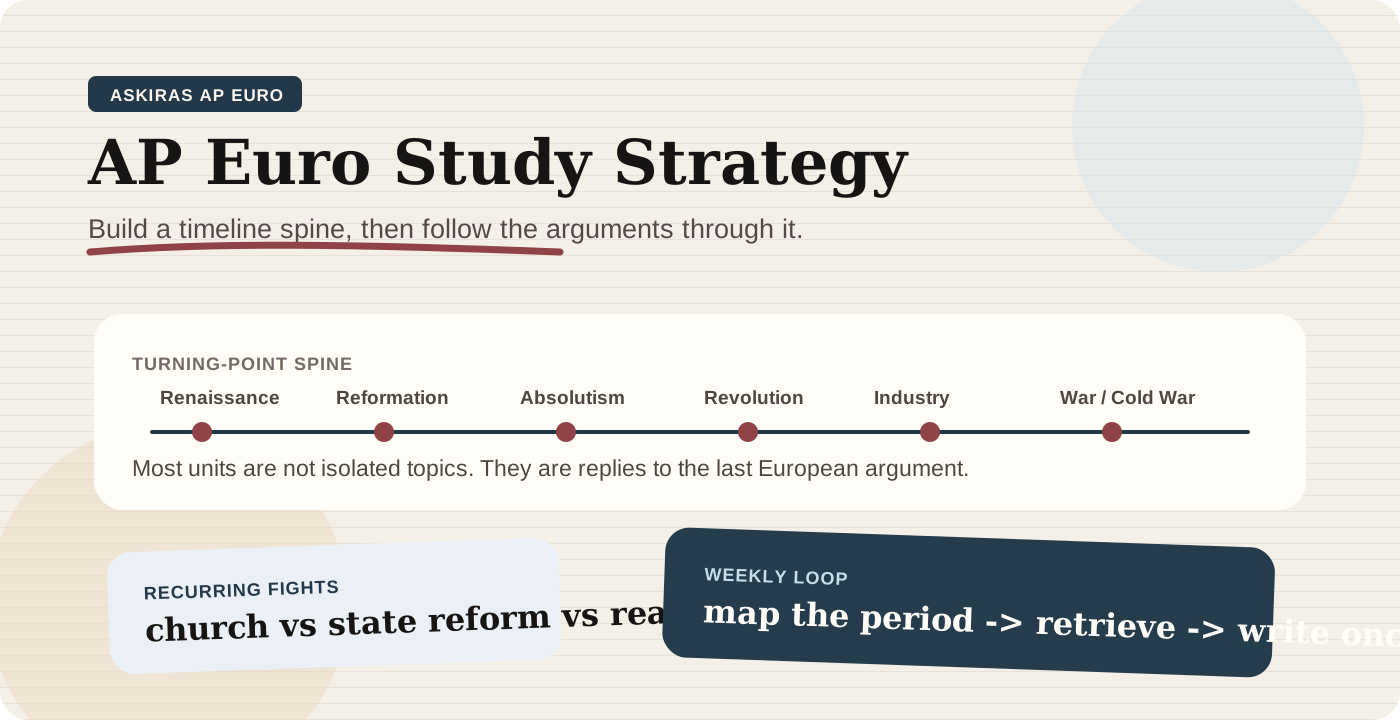
Most AP Euro studying fails because the notes never turn into a map
The classic AP Euro panic plan is familiar: reopen the packet, reread the chapter, highlight a few more dates, and hope the century starts to sort itself out.
It usually does not.
AP Euro is easier when you notice that most units are arguments with sequels. One era does not replace the last one cleanly. It responds to it.
The Reformation is partly a religious fight and partly a political one. The Enlightenment is intellectual, but it also rearranges authority. Industrialization changes economics, class, cities, and politics at the same time.
That means your study plan has to do more than store facts. It has to show how one European argument turns into the next.
Start with turning points, not chapter titles
If your notes currently look like a shelf of disconnected units, rebuild them around the biggest turns.
A useful first pass is:
- Renaissance and new humanist thinking
- Protestant Reformation and religious fracture
- absolutism versus constitutional limits
- scientific revolution and Enlightenment thought
- French Revolution and Napoleonic change
- industrialization and class conflict
- nationalism, liberalism, conservatism, socialism
- total war and ideological struggle
- Cold War and the remaking of Europe
That list is not fancy. It works because it gives the century a sequence.
It gives you a sequence. Once the sequence is there, individual rulers, policies, and movements have somewhere to land.
Then track the recurring fights
AP Euro feels like detail overload when you study every event as its own object. It gets lighter when you sort developments into repeated disputes.
These are the ones worth coming back to:
- Who should rule: monarch, parliament, party, nation, empire?
- What authority should religion have in public life?
- Who benefits from economic change and who gets destabilized by it?
- Which ideas count as legitimate: divine order, rational reform, nationalism, socialism, fascism?
- Who belongs to the political community?
If you can answer those questions inside each period, you are not just memorizing. You are building the exact comparisons the exam asks for.
A short example
Suppose you are reviewing Unit 4 and Unit 5. A weak summary looks like this:
- Enlightenment
- American Revolution
- French Revolution
- Napoleon
- Congress of Vienna
That is a list, not a study tool.
A better version sounds like this:
- New ideas challenge inherited authority.
- States try to contain or redirect those ideas.
- Revolution expands political participation for some people and closes it for others.
- European elites then try to restore order without erasing the whole transformation.
Now the topics connect. You can see argument, reaction, and consequence instead of five loose objects.
Use a three-part weekly loop
1. Rebuild one period fast
Do one short content pass. Not everything. Just enough to answer:
- what changed
- who gained or lost power
- which new ideas or technologies mattered
2. Do one retrieval round without notes
Close everything and write from memory:
- the main turning point
- two specific examples
- one reason it mattered for the next period
If you cannot do that, the notes are still sitting in your eyes instead of your head.
3. Do one exam-shaped task
Choose one:
- a source-based MCQ set
- a DBQ plan
- an LEQ outline
- one SAQ block
The goal is not volume. The goal is transfer.
AP Euro students often know more content than their essays show because they practiced reading and remembering, not using.
Study themes by pair, not by pile
One useful AP Euro habit is pairing themes that keep colliding.
Try study pairings like:
- church and state
- science and authority
- nationalism and empire
- industrialization and class
- reform and reaction
That creates friction, which is good. It forces you to explain movement instead of naming a topic.
For example, industrialization gets much easier when you stop treating it as only an economics chapter. It is also urbanization, labor, middle-class growth, state response, and new political ideologies.
What to memorize and what to stop memorizing
You do need names, events, and examples. But not all names are equally useful.
Memorize what helps you argue:
- anchor events
- major reforms
- emblematic thinkers
- wars and settlements
- policy examples
- movements with clear consequences
Do not spend the same energy on every minor personality if that detail never helps you make a comparison, explain a cause, or support a thesis.
AP Euro favors evidence with a job.
The two habits that save the most time
Keep one running chronology page
One sheet. One order. Only the biggest turns.
If the course feels blurry, return there first.
Keep one running mistake log
After practice, sort misses into:
- wrong century
- wrong side of the debate
- weak source reading
- vague evidence
- thesis too broad
That is much more useful than writing “careless” next to everything.
What to stop doing when you feel behind
Stop restarting the entire course from Unit 1 every time anxiety spikes.
Stop reading without retrieval.
Stop overbuilding notes that never become practice.
AP Euro improvement usually looks less dramatic than students expect. It is often just this:
- clearer chronology
- better source reading
- shorter, stronger arguments
That is enough to move scores.
If your study system keeps making the course feel larger, it is the wrong system. Good AP Euro prep should make the disputes sharper, the timeline cleaner, and the writing decisions easier.
Frequently asked questions
Do I need a perfect timeline before I start practicing AP Euro questions?
No. You need a usable spine, not a museum catalog. Once you can place the big turning points in order, shift quickly into source work and writing practice.
What is the biggest AP Euro study mistake?
Rereading without retrieval. It feels productive, but it hides whether you can actually place a development in period, connect it to a theme, or use it in an argument.
How should I split AP Euro study time between content and writing?
Rebuild the map first, then spend most of your serious effort on source-based MCQs, DBQ planning, LEQ outlines, and short retrieval drills.
Keep going in this exam
Other guides at Askiras
If you are also prepping another exam, these short guides cover the same "name the pattern, then practice" habit.